
Understanding the Journey of a British Shorthair Cat's Pregnancy

Updated: Sep 13
The Stages of Pregnancy in Cats
A cat's pregnancy lasts about 63 to 65 days—just over nine weeks from conception to delivery. For most of this time, it may seem like nothing is happening. However, in the final stretch, everything changes rapidly. With Gemma now in her last days before delivering the Blue Note Jazz litter, let's explore what a healthy gestation looks like, stage by stage.
Weeks One and Two: Nothing to See
Cats are induced ovulators. This means that the act of breeding itself triggers the release of eggs. Fertilized embryos travel to the uterus and implant around days 10 to 12. From the outside, a queen in early pregnancy looks and acts just like a queen who is not pregnant. She eats normally, plays normally, and offers no hints. Experienced breeders learn not to read anything into this stage because there is nothing to read.
Week Three: The First Visible Sign
Around days 15 to 21, the first outward change appears: the nipples become larger and noticeably pink. Breeders call this "pinking up," and it is often the first real confirmation that breeding took place. Some queens also experience a brief stretch of reduced appetite or occasional morning nausea during this time—the feline version of morning sickness. Thankfully, it passes quickly.
Weeks Three to Four: Confirmation
This is the window when a veterinarian can confirm the pregnancy. Gentle palpation by an experienced vet can detect the developing kittens around days 20 to 25. Each kitten feels like a small, distinct swelling. An ultrasound can confirm even earlier and can detect heartbeats by around day 20. However, palpation and early ultrasound cannot reliably count the kittens. For an accurate count, an x-ray after day 42 is the dependable method. Knowing the expected count is crucial on delivery day, as it tells you when the queen is done.
Weeks Four to Six: The Appetite Arrives
By the middle weeks, the queen's energy needs climb steadily, and her appetite increases. This is when we transition a pregnant queen onto kitten food. Kitten food is formulated for growth, which is exactly what her body is doing. She will stay on it through weaning. Her belly begins to round out, although a British Shorthair's dense coat and sturdy build can disguise a pregnancy longer than you might expect. She may sleep more and choose warmer, softer places to rest.
Weeks Six to Eight: Movement
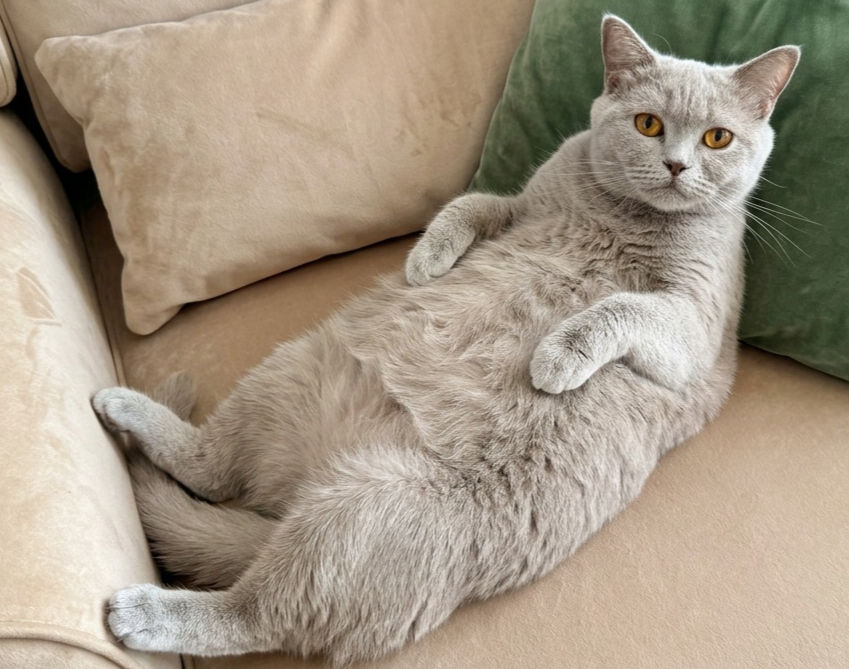
Around week seven, resting a hand gently on the queen's side may reveal the kittens moving—small rolls and flutters under the coat. The queen's shape changes from rounded to unmistakably pregnant, and she slows down. Jumping to high places becomes less frequent. Grooming her belly becomes more common, and her preferred activity shifts to stretching out somewhere soft and supervising the household from a reclined position. Gemma has embraced this stage with particular commitment.
The Final Week: Nesting
In the last days, the queen begins searching for a place to deliver. She may investigate closets, drawers, and the undersides of beds with newfound interest. We provide a nesting box in a quiet, warm, dim room well before she needs it. This way, it becomes familiar territory rather than a strange object introduced at the last minute. Her appetite often drops in the final day or two. Additionally, her rectal temperature typically falls below 100°F within about 24 hours of labor—one of the more reliable short-term signals that delivery is close. Restlessness, frequent grooming of the hindquarters, and vocalizing round out the final signs.
What Healthy Care Looks Like Across All Nine Weeks
A few principles hold from the first week to the last. The queen sees a veterinarian to confirm the pregnancy and again if anything seems off. Appetite loss beyond the brief week-three dip, discharge, or lethargy all warrant a call. No medications, flea treatments, or dewormers are given without veterinary guidance, as several common products are unsafe during pregnancy. Her environment remains calm and predictable, with no new animals introduced and no boarding or travel. Importantly, she is never picked up by the midsection in late pregnancy. When lifting is necessary, support comes from under the chest and hindquarters.
Mostly, though, a healthy pregnancy is quiet. The queen does the work, and my job as a breeder is to feed her well, watch closely, and resist the urge to interfere with a process that has functioned on its own terms for a very long time.
Gemma is in her final days now. When the Blue Note Jazz litter arrives, I will share the announcement here and on our social channels.
🐾 Curious about an upcoming litter? → see current litters or learn about the reservation process
🐾 To stay updated on new arrivals and available litters, subscribe to our newsletter


Comments