
Fawn vs. Lilac British Shorthair: How to Tell the Rarest Dilute Apart

Most people picture one cat when they hear "British Shorthair": the blue. Fewer know the breed comes in a color so uncommon that it is routinely sold under another name. The color is fawn, and the name it usually travels under is lilac.
We learned this in our own program. One of our queens came to us labeled lilac, and her coat matured warmer than a lilac's should. That experience is why we rely on DNA panels rather than labels, and why we think every buyer of a dilute British Shorthair should understand the difference.
It is not cosmetic trivia. The distinction changes what a cat can produce, what a kitten actually is, and what a buyer is paying for.
What fawn actually is
Fawn is cinnamon with the dilute gene applied. Two genes do the work, and a cat needs a matched pair of recessive variants at both.
The first is the brown gene, which sets the base color. It has three versions, ranked by dominance: black (B), chocolate (b), and cinnamon (bl, sometimes written b1). Cinnamon sits at the bottom of that ranking, so it shows only when a cat inherits it from both parents. The UC Davis Veterinary Genetics Laboratory, which identified these variants, lists the order as B over b over bl.
The second is the dilute gene. Two copies of dilute (d/d) soften every base color: black becomes blue, chocolate becomes lilac, and cinnamon becomes fawn.
So the two colors that get confused are built differently:
Lilac is diluted chocolate. Genetically it is b/b d/d, or b/bl d/d when the cat also carries cinnamon.
Fawn is diluted cinnamon. Genetically it is bl/bl d/d, and nothing else.
That middle case matters. A lilac can carry cinnamon invisibly, which is how two lilac parents can produce a fawn kitten that nobody expected.
Fawn and lilac, side by side
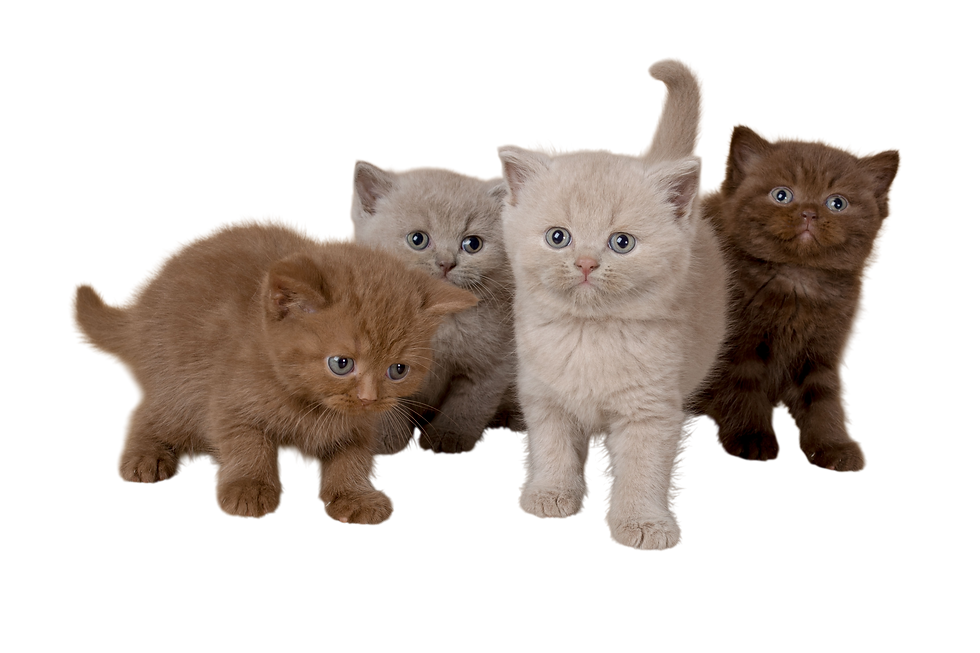
The short version: lilac leans cool and lavender, fawn leans warm and rosy. The CFA breed standard describes both, and the clearest tell it offers is in the nose leather and paw pads.
Lilac | Fawn | |
Built from | Chocolate plus dilute | Cinnamon plus dilute |
Genotype | b/b d/d or b/bl d/d | bl/bl d/d |
Coat | Lavender with a pinkish tone | Pale, warm lavender with cocoa overtones |
Nose and paw pads | Lavender-pink | Dusty rose, with no blue or lavender cast |
Eyes | Gold or copper | Gold or copper |
How often you will see one | Uncommon | Rare |
Why the eye gets it wrong
On paper the difference is clear. In a living cat it is not, for three reasons.
Kitten coats shift. A newborn's color is an unreliable read, and dilute coats keep changing in tone for months.
Light changes everything. The same cat looks cool by a window and warm under a lamp. Photographs make it worse.
Most people have never seen both. Fawn is rare enough that many breeders and buyers have no reference cat to compare against, so a pale warm dilute gets called lilac by default.
None of this requires bad faith. It only requires someone naming a color by looking at it.
Why fawn is rare
Fawn needs four recessive variants to line up: two cinnamon, two dilute. Both parents have to carry both, and cinnamon is the least common brown variant in the breed.
The odds show it. Two black cats that each carry cinnamon and dilute will produce a fawn kitten about one time in sixteen. Two lilacs that each carry cinnamon do better, at one in four, but only if the breeder knows the cinnamon is there. That is the honest reason fawn kittens cost more than blues: fewer pairings can produce them, and each pairing produces few.
Meet Duke
Duke is the reason this post exists. He is a fawn boy from our September 2026 litter, the one we named for jazz musicians, and he is the last of five still looking for his home.
He has the warm, rosy coat this guide describes, without the cool lavender cast of a lilac. We are confirming his color by UC Davis VGL panel.

Duke was named after Duke Ellington, a pianist, composer and bandleader whose orchestra ran from the 1920s into the 1970s. Duke was not his given name. A boyhood friend gave it to him for his dapper bearing — the good manners, the careful dress — and it stayed with him for life.
Our Duke came by his name the same way. He is a plump boy with a sumptuous fawn coat, quiet composure, and sophistication. His amber eyes are just now coming through and will make for a strikingly beautiful complement to his warm-toned fur.
His four littermates leave in pairs beginning in early December, so Duke is ready on the same schedule. He is raised in our home in Bloomington, Illinois, along with children, dogs, and everyday household noises, meaning he will be well-socialized and ready to settle into his new home.
If you have been looking for a fawn British Shorthair, you already know how seldom one is available. Duke's page has his photos, price, and the reservation steps: purrfectlyplushcattery.com. If you would rather ask a question first, write to us. We are glad to talk through the genetics with anyone, whether or not Duke is the right cat for you.


Comments